
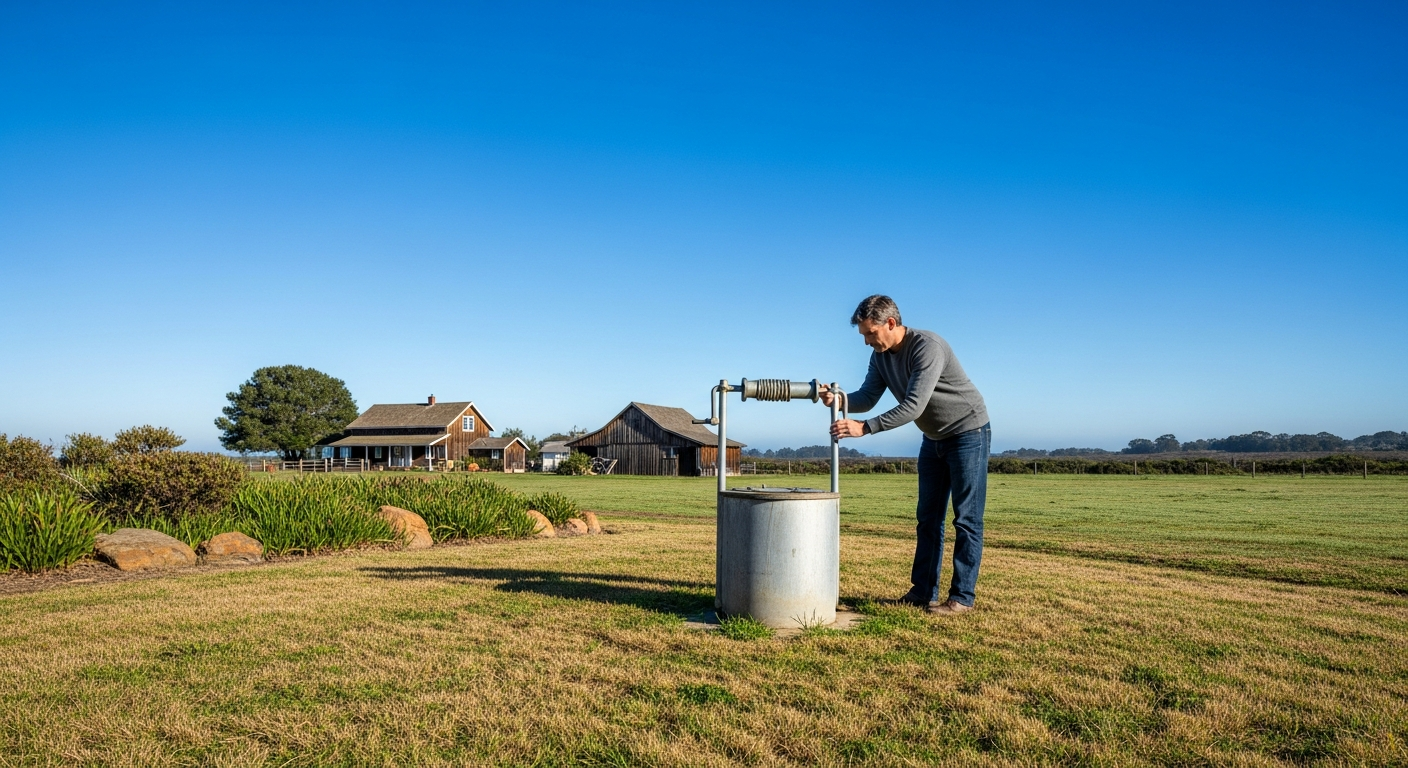
Most buyers transitioning from suburban neighborhoods to rural acreage do not realize that turning on a faucet means operating a miniature private utility company. When you purchase a property relying on a private well, you assume full responsibility for the quality, delivery, and reliability of your own water supply. It is not as simple as paying a monthly municipal bill. You must understand the mechanics of pumps, storage vessels, and filtration systems to ensure your investment remains viable.
How a Well System Moves Water
At its core, a private well system relies on three main components: the well itself, a pump, and a pressure tank. The well is a hole drilled deep into the ground, lined with a steel or plastic casing to prevent collapse. Water from underground aquifers seeps into this casing through screens at the bottom.
To get that water into your kitchen sink, an electric pump must push or pull it upward. For buyers exploring outlying acreage, evaluating these components is just as critical as inspecting the foundation of the house. Understanding these systems helps prevent unexpected expenses after closing, especially when purchasing unique rural properties in North County or other undeveloped areas.
Submersible Pumps and Pressure Tanks
The most common pump type for modern residential wells is the submersible pump. This is a long, cylindrical motor lowered deep into the well casing, positioned below the water level. When you turn on a tap, a pressure switch detects the drop in water pressure and signals the pump to push water up the pipe.
However, a pump cannot run constantly without burning out. This is where the pressure tank comes in. The pressure tank contains a bladder filled with air. As water is pumped into the tank, it compresses the air, creating pressure. When you open a faucet, this pressurized air pushes the water through your home without needing to turn the pump on immediately. A standard well pump should only cycle on when the tank pressure drops below a specific threshold, typically 30 to 50 pounds per square inch.
If you are currently researching properties, downloading a dedicated buyer's guide can help you organize your checklist for rural infrastructure inspections.
The Role of Holding Tanks in Low-Yield Systems
In some areas, wells do not produce water fast enough to meet peak demand. A well's recovery rate, measured in gallons per minute, determines how quickly the aquifer replenishes the well casing. If a well only produces two gallons per minute, running multiple showers and a washing machine simultaneously will quickly pump the well dry.
To solve this, property owners install a holding tank. This is a large, non-pressurized storage vessel, often holding 1,000 to 5,000 gallons, located above ground. A low-yield well pump runs slowly throughout the day to fill this holding tank. A secondary pump, known as a booster pump, then draws water from the holding tank and pressurizes it for home use.
This setup ensures you have ample water storage for daily activities, irrigation, and fire protection. In dry regions, having significant water storage is essential for safety and insurance purposes. When preparing to purchase, you should also analyze how local environmental factors impact your overall budget, such as evaluating regional home insurance costs for properties in high-hazard zones.
Water Quality, Testing, and Flow Rate Inspections
Municipal water is treated and tested constantly, but well water is entirely your responsibility. Before purchasing any property with a private well, you must perform a detailed water test. This test should analyze the water for bacteria, nitrates, heavy metals, and local contaminants like arsenic or radon.
You must also conduct a well yield test. This test, typically performed by a licensed well technician, runs the pump for several hours to measure the sustained gallons per minute the well can produce. In many rural areas, a minimum yield of three to five gallons per minute is required to secure residential financing.
If you are planning to buy vacant land with the intention of drilling, keep in mind that well placement is heavily regulated. For example, sellers must often complete specific well and septic certifications before a transaction can proceed, as these systems must maintain strict physical distances from one another to prevent contamination.
Routine Maintenance and Red Flags for Buyers
A well system can last for decades, but individual components have limited lifespans. Submersible pumps typically last 10 to 15 years, while pressure tanks often need replacement after 5 to 10 years. During your physical inspection of the property, look for these common warning signs:
Sputtering faucets: This often indicates air in the plumbing system, which can mean the pump is positioned too high or the water level in the well is dropping.
Short-cycling: If the well pump turns on and off every time you open a faucet for a few seconds, the pressure tank bladder has likely ruptured.
Cloudy or sandy water: This suggests the well screen is damaged, or the well is beginning to fill with sediment, which quickly ruins pump motors.
Fluctuating water pressure: A failing pressure switch or a struggling booster pump can cause noticeable drops in water delivery.
Replacing a well pump or drilling a new well entirely can cost thousands of dollars. Uncovering these issues during the escrow period allows you to negotiate repairs or price adjustments before you take ownership of the system.
Understanding private water infrastructure is a vital part of acquiring rural acreage. To make sure you are fully prepared for the unique aspects of country living, With the right preparation, you can purchase your rural property with complete clarity regarding your utility systems.