
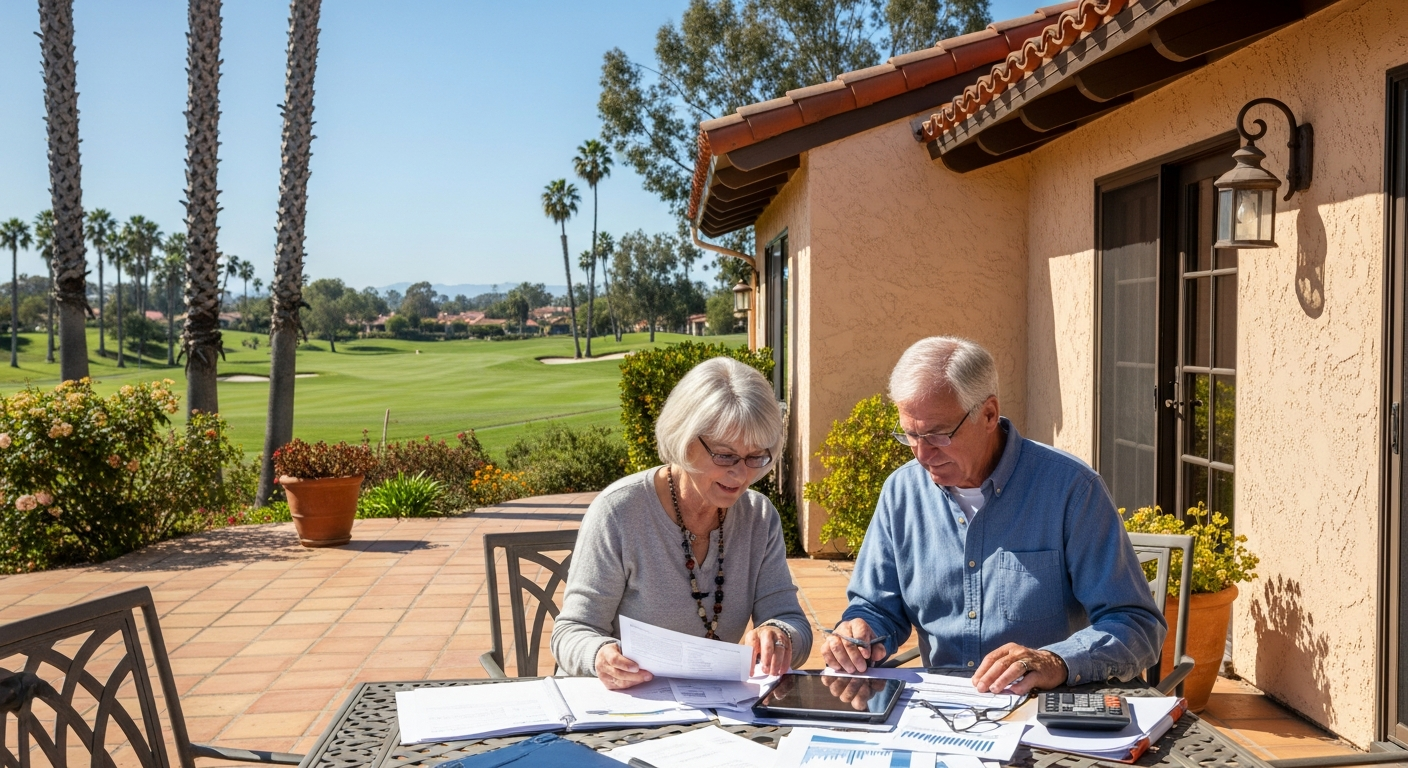
Many retirees moving to Oaks North or Seven Oaks in Rancho Bernardo look at the initial list price of a home and assume their monthly budget is set, only to be surprised by how much the homeowners association dues shift their actual carrying costs. In North County Inland, age-restricted developments offer extensive recreational packages, but these shared benefits come with structured financial obligations. Understanding how these fees are calculated, what they cover, and how they can rise is essential for anyone planning a fixed-income retirement in this region.
The Baseline Costs of Oaks North and Seven Oaks
Rancho Bernardo features some of the most established age-restricted neighborhoods in Southern California. Oaks North and Seven Oaks are the primary destinations, each offering distinct housing styles ranging from detached single-family homes to attached garden condos. While the initial appeal of these neighborhoods often centers on their golf course views and quiet streets, the underlying financial structure is governed by one or more homeowners associations.
When you purchase a home in these communities, you are not just buying real estate. You are buying into a shared infrastructure. In Seven Oaks, for example, residents pay a community association fee that grants access to the central clubhouse, pool, and recreational facilities. However, if you buy an attached condo within Seven Oaks, you will likely pay a secondary fee to a sub-association that manages the exterior maintenance, roof repairs, and common area landscaping for your specific building. This dual-fee structure can quickly push your monthly housing expenses higher than anticipated.
Before writing an offer, it is critical to review the specific governance of the property. Reading the complete association package is the only way to verify what your money actually pays for each month.com/hoa-documents-california-condos/">HOA deep dive on condo documents to learn what to look for in the financial disclosures.
What the Monthly HOA Fee Actually Covers
In Rancho Bernardo retirement communities, HOA fees generally cover common area landscaping, trash pickup, exterior building maintenance for attached homes, and access to community centers. The community centers themselves are major selling points. They feature swimming pools, tennis courts, lawn bowling greens, woodshops, and meeting rooms. Maintaining these facilities to a high standard requires constant funding, which is drawn directly from your monthly dues.
For buyers transitioning from traditional single-family homes, calculating these carrying costs is a vital step in the planning process. If you are preparing to purchase a home in one of these neighborhoods, utilizing our Buyer's Guide will help you organize your budget and understand the complete transaction timeline. Knowing whether your monthly fee covers exterior paint, roof replacement, or common area hazard insurance allows you to compare the true cost of different properties accurately.
It is also important to note that utility structures vary. Some associations bundle water and sewer services into the monthly dues, while others require owners to establish individual accounts. In older Rancho Bernardo developments, shared heating or cooling systems can occasionally lead to collective utility billing, which can fluctuate seasonally.
The Risk of Special Assessments and Reserve Deficits
Beyond the regular monthly fee, buyers must account for the financial health of the association itself. California law requires associations to perform regular reserve studies to determine if they have enough saved to cover long-term capital improvements, such as repaving private streets, replacing clubhouse roofs, or replastering community pools. If an association has deferred maintenance and a low reserve funding level, the board may vote to implement a special assessment.
A special assessment is a one-time or structured temporary charge levied on all homeowners to pay for major repairs. For a retiree on a fixed budget, an unexpected assessment of several thousand dollars can cause significant strain. This risk is particularly relevant in older 55-plus developments built in the 1970s and 1980s, where aging utility lines and recreational facilities are reaching the end of their functional lifespans.
These long-term capital expenses are distinct from municipal taxes, though they impact your monthly carrying costs in a similar manner. If you are comparing different neighborhoods in the area, it is helpful to look at how different public and private fees affect your bottom line. You can com/understanding-mello-roos-and-long-term-ownership-costs/">understanding Mello-Roos and long-term ownership costs.
How to Calculate Your True Monthly Carrying Costs
To determine the actual cost of living in a Rancho Bernardo retirement community, you must look beyond the principal, interest, taxes, and insurance. Use this structured approach to calculate your true monthly commitment:
Review the Reserve Study: Obtain the current year's operating budget and the reserve study for the association. Look specifically at the reserve funding percentage. A funding level of 70% or higher is generally considered healthy, while anything below 30% indicates a high risk of future fee increases or special assessments.
Identify Non-Inclusive Amenity Fees: Factor in personal usage costs that are not covered by the HOA. If the community center charges additional fees for specific activities, class registrations, or guests, add an estimate for those expenses to your monthly budget. Some golf-course adjacent communities require separate social or golf memberships that are not included in the standard HOA dues.
Account for Annual Inflation: HOA boards typically adjust dues annually to keep pace with the rising costs of landscaping labor, pool chemicals, and property insurance. Budgeting for a three to five percent annual increase in your HOA dues will prevent your fixed retirement income from being squeezed in the future.
Making a Balanced Decision in Rancho Bernardo
Living in an age-restricted community offers clear benefits, including social connectivity, dedicated recreational amenities, and low-maintenance living. For many, the convenience of having the association handle front-yard landscaping and exterior maintenance is well worth the monthly cost. The key is ensuring that these expenses are predictable and fully accounted for before you sign the purchase contract.
By analyzing the association financial disclosures with the same diligence you apply to the physical home inspection, you can protect your retirement savings from unexpected surprises. Rancho Bernardo remains one of the premier destinations for active adult living in North County, provided you enter the transaction with clear financial expectations.
Securing a home in an active adult community should provide peace of mind, not financial uncertainty. If you are ready to begin searching for properties in Oaks North, Seven Oaks, or other local neighborhoods, Having a clear understanding of local market dynamics and carrying costs will ensure your transition is both successful and secure.