
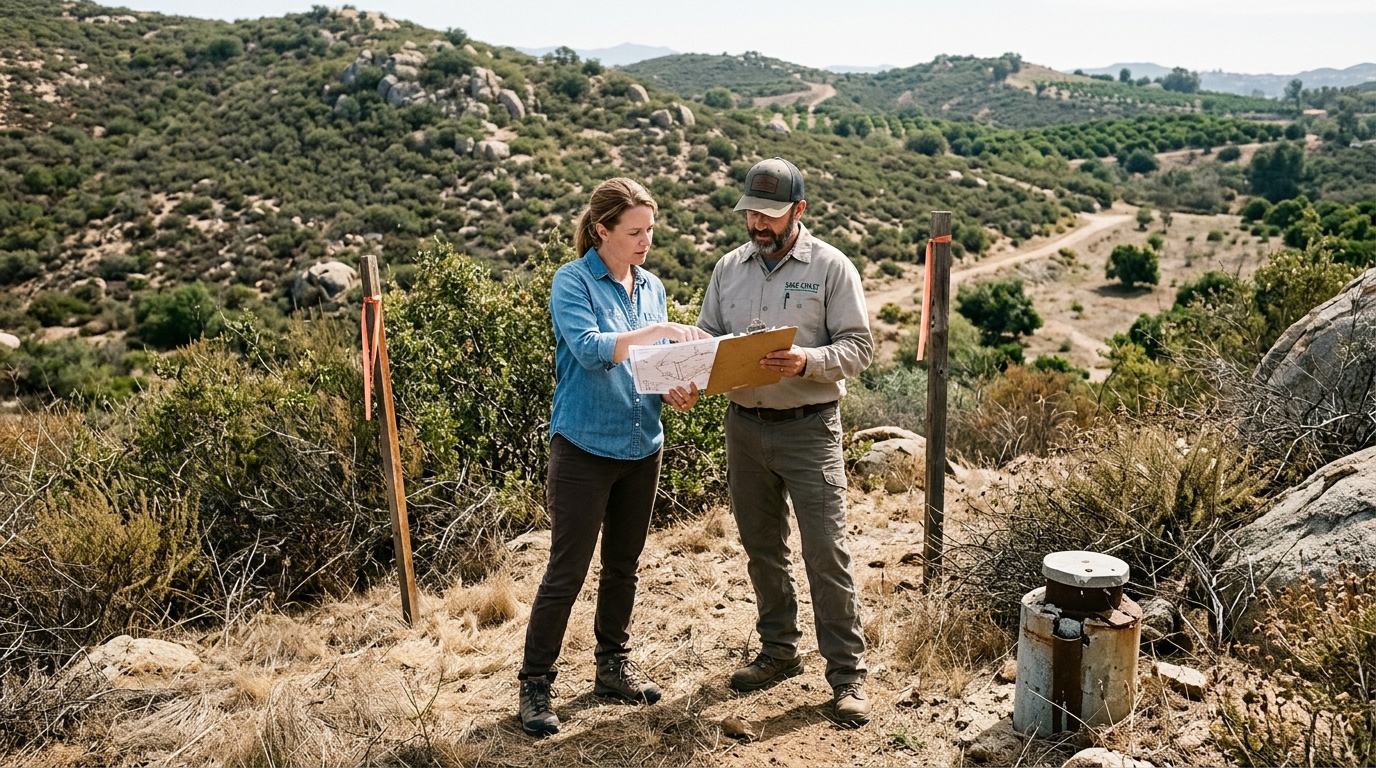
Writing an offer on a parcel of acreage feels straightforward until the inspection timeline starts ticking. Buying raw land or a rural residential parcel involves physical and legal variables that never come up in a suburban tract purchase. Once you remove your contractual contingencies, your deposit is committed, making thorough due diligence during the initial inspection window critical to protecting your investment.
Water Supply: Testing Well Production and Quality
A private well is an independent utility system that requires rigorous verification. Never rely on the seller disclosure or an old drilling log to confirm current water availability. Static water levels and recharge rates change based on seasonal rainfall, local aquifer draw, and the mechanical age of the pump equipment.
You should hire a licensed well contractor to perform a sustained four-hour continuous pump test. This test measures the steady yield in gallons per minute (GPM) and records how quickly the water table recovers once the pump shuts off. A well producing three gallons per minute with rapid recovery can support a single-family home with adequate storage tanks, while a higher flow rate with sluggish recovery might indicate a depleting underground pocket.
Simultaneously, send water samples to a certified laboratory to test for potability. The lab should screen for coliform bacteria, nitrates, total dissolved solids, and heavy metals. When evaluating rural property well water systems, filtration systems can correct mineral imbalances, but finding out you need a ten-thousand-dollar water treatment setup is something you want to know before waiving your inspection rights.
Waste Systems: Septic Certifications and Soil Capacity
If the acreage does not connect to a municipal sewer system, the entire wastewater solution rests beneath the soil. An existing home requires a complete septic inspection, which goes beyond simply opening the tank lid. The tank must be pumped, the baffles checked for structural integrity, and the absorption area evaluated for signs of surfacing effluent or root intrusion.
Reviewing recent septic tank inspections and pumping certifications helps establish system maintenance history, but you still need an independent evaluation during escrow. If you are purchasing vacant land with plans to build, you must verify that the parcel has passed a percolation test or schedule one immediately. A percolation test determines the rate at which soil absorbs liquid, which dictates whether you can install a conventional gravity system or if you will be required to engineer an expensive pressurized or mound system.
Before moving forward on any parcel purchase, reviewing our comprehensive buyer resource materials will give you the exact steps needed to line up specialized inspectors quickly within standard contingency periods.
Defensible Space and Fire Clearance Mandates
Rural parcels in semi-arid and hillside regions face strict fire prevention regulations that carry substantial ongoing maintenance obligations. Local fire protection districts and state forestry agencies enforce defensible space standards designed to protect structures and allow emergency vehicle access.
Inspect the property for required clearance zones around all planned or existing structures:
Zone 1 (0 to 30 feet): Requires a complete fuel-free buffer, removing dead vegetation, dry leaves, and any overhanging branches near roofs.
Zone 2 (30 to 100 feet): Requires thinning dense brush, creating vertical spacing between shrubs and tree canopies, and mowing dry annual grasses down to four inches or less.
Access Roadways: Driveways must typically maintain horizontal brush clearance and vertical clearance for fire engines.
Steep topography accelerates flame spread, which often increases the required clearance radius. Clearing dense native chaparral, oak brush, or overgrown groves on multi-acre parcels can cost thousands of dollars annually. Factor these recurring operational costs into your overall monthly property budget before signing off on environmental disclosures.
Access, Easements, and Property Boundary Verification
Never assume that a paved road or dirt track leading to the parcel constitutes deeded, legal access. Rural properties frequently rely on ingress and egress easements that cross neighboring private parcels. You must review the preliminary title report to confirm that access easements are properly recorded, insurable, and unrestricted.
Look for shared road maintenance agreements as well. When an access road is shared among several parcels without a formal maintenance agreement, repairing storm washouts or repaving becomes a cooperative negotiation among neighbors rather than a municipal responsibility. If an agreement does not exist, you may shoulder unexpected repair bills to keep your driveway passable for delivery vehicles and passenger cars.
Boundary verification is equally important. Fences on acreage properties are often placed along lines of convenience rather than actual legal property lines. Commissioning a boundary survey or locating physical corner pins prevents costly boundary disputes regarding encroachments, agricultural groves, or accessory outbuildings.
Zoning, Setbacks, and Permitted Land Uses
County zoning ordinances determine what you can physically do on the land once you take ownership. Just because a neighboring parcel has a detached workshop, horses, or a secondary dwelling unit does not mean your parcel automatically qualifies for the same uses.
Review the specific zoning designation for constraints on animal keeping, agricultural operations, and maximum structure coverage. Pay close attention to environmental overlays such as biological study areas, wetland buffers, and steep slope restrictions, which can reduce the buildable footprint of a multi-acre parcel to a fraction of its total acreage. Understanding standard California real estate contingency timelines allows you to submit building inquiries to the local planning department well before your due diligence rights expire.
Protecting Your Deposit Before Contingency Removal
Waiving contingencies on rural land without specialized testing exposes you to expensive infrastructure surprises that rarely show up during a casual property walk. Taking the time to test well yield, certify the septic system, confirm road access, and verify fire clearance obligations keeps your purchase grounded in verified facts.
If you are planning to purchase acreage and want structured guidance through the inspection phase, consult our in-depth guide for property buyers to prepare your due diligence plan before you write an offer.