
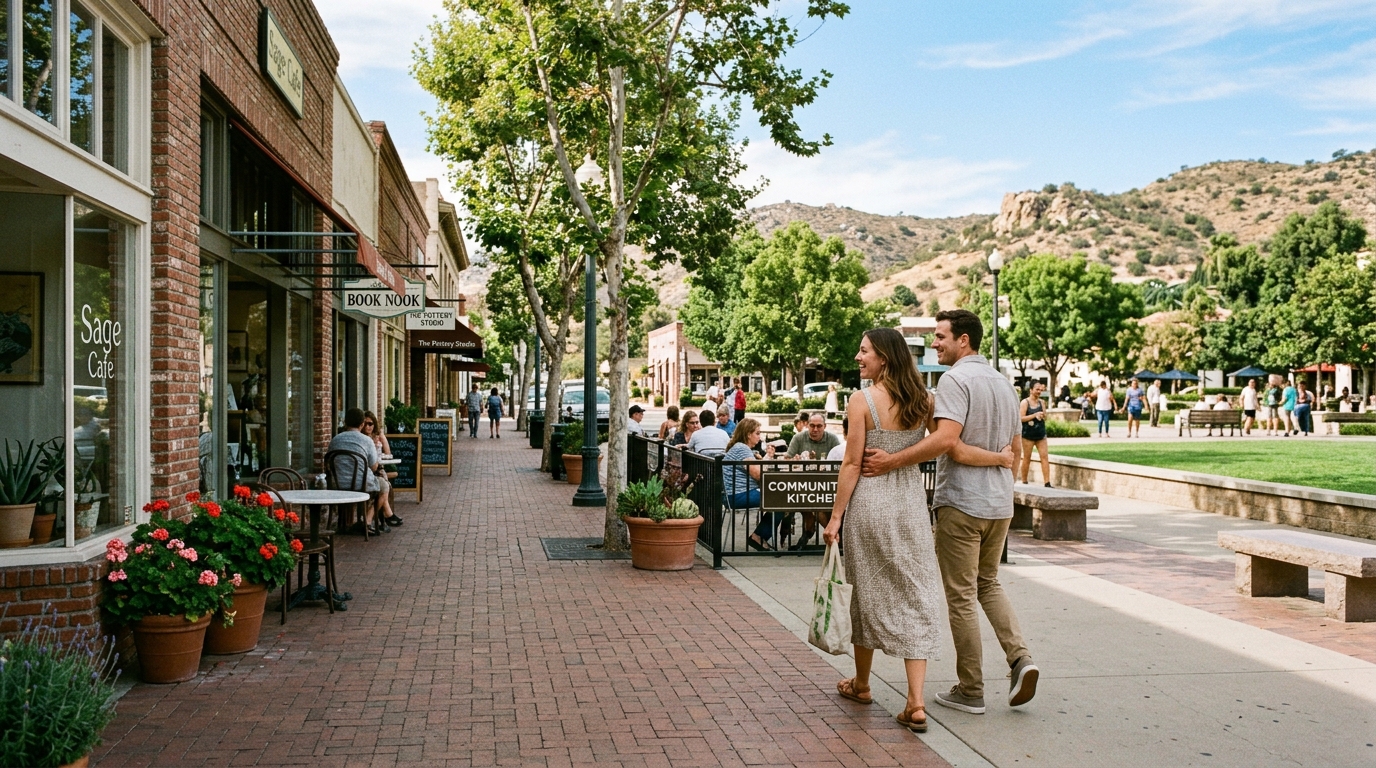
When evaluating a potential place to live, spending an afternoon scrolling through real estate listings reveals only a fraction of the full picture. The best things to do when exploring a new community happen on foot, away from the model homes and sales offices. Visiting the local parks, testing morning traffic patterns, and observing public squares tell you how a neighborhood actually functions on an ordinary Tuesday. Doing this fieldwork early prevents expensive surprises and clarifies whether a town matches your daily habits.
Walk the Downtown Core During Normal Business Hours
A town center tells you about the economic stability and civic pride of an area faster than any real estate brochure. Take an hour to walk the main commercial streets on a weekday morning or early afternoon. Notice whether storefronts are occupied by longstanding local merchants or if there are clusters of vacant retail spaces. Pay attention to how clean the sidewalks are, how pedestrian crossings are managed, and whether people are out walking dogs or greeting shop owners.
Independent businesses reflect the community's willingness to spend money locally. A district filled with family-owned cafes, hardware stores, and neighborhood bakeries signals a loyal resident base that invests in its own town. If you only visit during an evening festival or weekend farmers market, you see the community in party mode. Visiting at 10:00 AM on a Thursday shows you the real baseline of local commerce.
Spend Time in Regional Parks and Nature Preserves
Public recreation areas reveal how a municipality invests its maintenance budget. When touring a new town, head directly to its primary community park, sports complex, or regional trail system. Look closely at the condition of playground equipment, turf health, trail signage, and restroom facilities. A city that keeps its public parks in good order usually manages its wider infrastructure with equal care.
Recreational spaces also show you who your potential neighbors will be. You will see youth sports leagues practicing, walking clubs meeting on paved loops, and trail runners heading into open space preserves. In many regions, shifting just a few miles inland alters afternoon heat levels significantly, making it useful to understand how microclimates shape daily living and outdoor activities. Before getting attached to a particular neighborhood, downloading our buyer guide for evaluating neighborhoods will help you organize what matters most in your daily routine.
Visit Local Cultural Centers and Weekend Markets
Civic life extends beyond retail strips and sports fields. Make a point to stop by the local arts center, regional museum, or community theater. These institutions demonstrate whether a city values culture and education or simply acts as a bedroom suburb where residents sleep before commuting elsewhere for entertainment. Towns with active arts programs often host free public events, summer concerts, and educational workshops that enrich daily life.
Weekend farmers markets offer another direct window into regional character. Visiting a Saturday market lets you sample regional produce, talk directly with local growers, and observe how residents interact with one another. It is also an ideal time to step into a local coffee shop to absorb the atmosphere. In fact, seasoned brokers often explain why an initial neighborhood consultation over coffee provides far more practical clarity than reviewing hundreds of online property photos from afar.
Test Daily Commutes and Essential Errands
Vacationing in a town is completely different from running your weekly errands there. To get an accurate assessment of convenience, drive from a prospective neighborhood to the nearest grocery store, pharmacy, and highway interchange at 5:15 PM on a weekday. What appears to be an easy five-minute drive on Sunday afternoon can turn into a twenty-minute bottleneck when local schools let out or shift workers head home.
Notice the availability of daily services within a ten-minute radius. Find out where you would take your car for service, where the nearest urgent care clinic is located, and which routes lead to regional transit stations. If you are comparing single-family homes with managed communities, remember to consider the difference between condo and planned development ownership, as private road maintenance and parking rules can dictate how daily traffic functions inside the neighborhood itself.
Drive the Residential Pockets at Night
A neighborhood that looks quiet and picturesque at noon can change character completely once the sun goes down. Plan an evening drive through target neighborhoods between 8:30 PM and 10:00 PM. Look at the density of street parking. If vehicles line both sides of the street and spill onto front lawns, driveway space is limited and garages are likely being used for storage rather than parking.
Listen for noise levels from nearby commercial corridors, flight paths, or rail spurs. Check the adequacy of streetlights and see whether neighbors are out walking under safe, well-lit conditions. These details are rarely captured in seller property disclosures, but they directly affect your comfort and peace of mind once you move in.
Activities for Researching a Community
To maximize your time on the ground, focus on activities that reveal routine functionality rather than curated tourist attractions.
Activity | What to Observe | Key Takeaway |
|---|---|---|
Downtown walking tour | Business occupancy and foot traffic | Indicates local economic health |
Park and trail visit | Facility maintenance and public use | Shows city upkeep and recreation access |
Weekday evening commute | Highway bottlenecks and signal delays | Reveals true daily travel times |
Nighttime street drive | Lighting, parking density, and noise | Shows real neighborhood living conditions |
Investing the effort to walk the streets, visit public facilities, and test daily routes gives you the objective context required to make a confident purchase. Before you begin touring individual homes, review our buyer guide for evaluating neighborhoods to align your budget with the communities that best support your way of life. Taking this structured approach keeps your search grounded in facts rather than initial impressions.
Bottom line: Spend a full day living like a resident before committing to a home purchase in any community.