
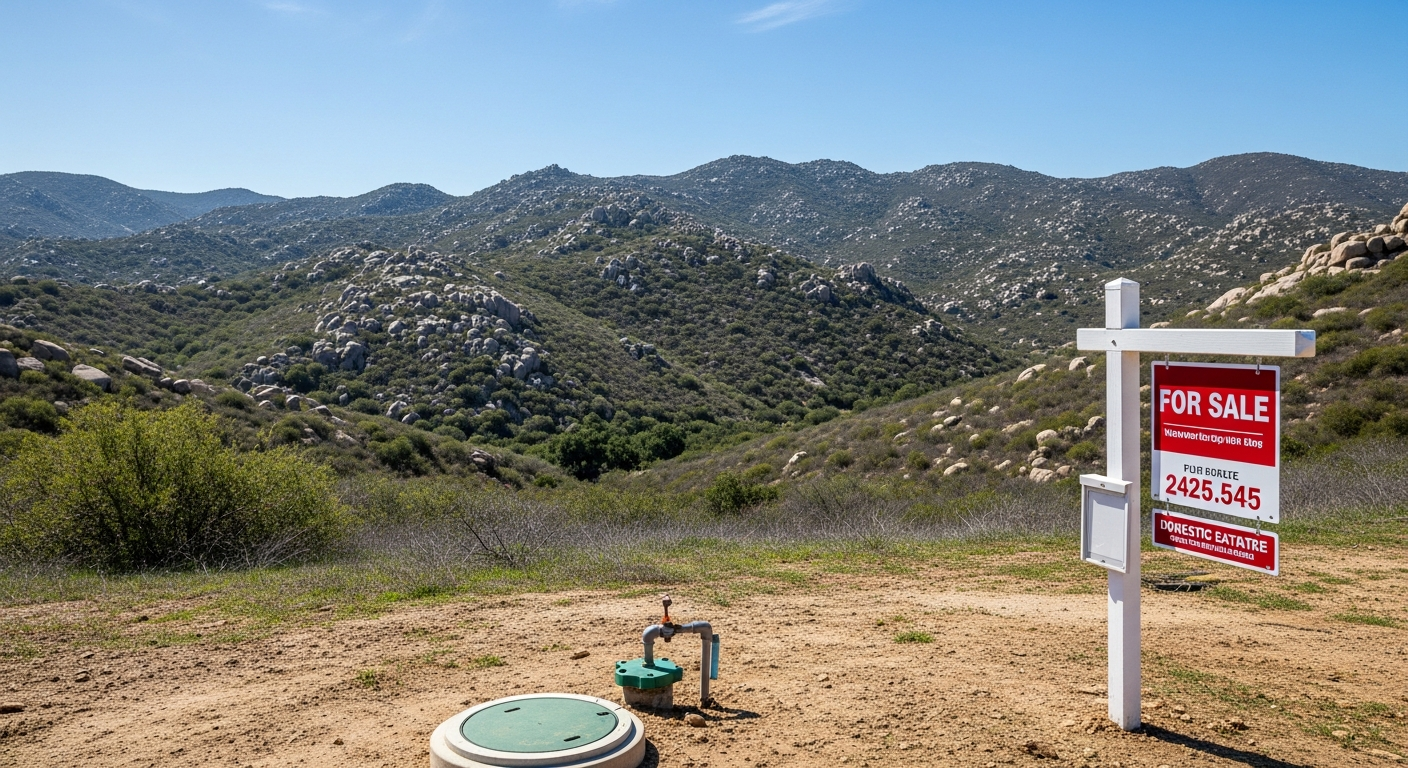
Valley Center properties rely almost entirely on private infrastructure, which means the decision to sell land Valley Center is fundamentally different from selling a home in coastal Oceanside or Carlsbad. If you are preparing to list an acreage property here, waiting until you are under contract to test your well and septic system is a high-risk gamble. In our local market, the most common reason rural transactions fall apart is not a disagreement over price, but a failed utility certification during the active escrow period.
The Reality of Private Water in Valley Center
Many buyers relocating from urban areas do not understand that Valley Center relies heavily on groundwater. When you list your property, the buyer's lender will almost certainly require a water well inspection. This is not a simple visual check. It is a multi-hour pump test that measures the well's yield in gallons per minute, followed by a water quality analysis to test for contaminants like nitrates, bacteria, and heavy metals.
If your well produces fewer than three to five gallons per minute, a buyer may need to install expensive storage tanks to qualify for a loan. By conducting these tests before your property goes live on the MLS, you can address low-yield issues or filtration needs ahead of time. This proactive approach prevents buyers from discovering these issues mid-transaction, which is one of the key lessons in understanding what buyers miss about rural properties in North County.
Septic System Inspections and the Certification Process
Unlike standard suburban homes connected to municipal sewer lines, rural acreage in Valley Center utilizes private septic systems. A septic certification is a formal process where a licensed contractor pumps the tank, inspects the structural integrity of the concrete or fiberglass, and evaluates the leach field's ability to absorb water.
San Diego County has strict guidelines regarding septic systems, especially in areas with clay-heavy soils or high water tables. If an inspection reveals a cracked tank or a failing leach field, repairs can easily cost between $10,000 and $30,000. Discovering this during escrow puts the seller in a weak negotiating position, whereas handling the inspection early allows you to obtain repair estimates on your own timeline or adjust your pricing accordingly. This is a critical component of preparing your property, similar to the steps outlined in our guide on how to price your home correctly in 2026.
Why Waiting Until Escrow Collapses Deals
The period between an accepted offer and closing is already filled with strict deadlines. In California, a standard escrow timeline is thirty to forty-five days. If you wait until you are under contract to schedule your well and septic certifications, you are introducing massive variables into a tight window. Finding a licensed septic pumper or a well technician in North County during peak selling seasons can take two weeks just for the appointment.
If the well test fails or the septic tank requires a new leach line, you must submit plans to the county for approval. This administrative process can delay closing by weeks or even months, causing buyers to walk away to protect their interest rates. Understanding how these delays impact the transaction is a core part of managing escrow from offer acceptance to keys in hand. Furthermore, unexpected septic issues are among the most common physical issues uncovered during the transaction, as noted in our analysis of home inspection secrets in San Diego County.
Before setting a listing price or marketing your acreage, knowing your property's exact utility status is essential. You can request a preliminary valuation and market analysis through our What's My Home Worth valuation tool to see how certified utilities impact your land's current market value.
The Financial Benefit of Pre-Listing Certifications
When buyers look at land in Valley Center, they are often overwhelmed by the potential unknowns of rural living. Presenting them with completed, clean well and septic certifications at the open house removes their largest source of anxiety. It signals that the property has been maintained with care and that there are no hidden capital expenditures waiting for them after closing.
Properties sold with pre-certified utilities almost always command higher prices and experience fewer price concessions during negotiations. Instead of negotiating credits for repairs under escrow pressure, you stand firm on your list price because you have already done the hard work of proving the land's viability.
Steps to Take Before Your Property Hits the Market
To ensure a smooth sale, follow this sequence before contacting a photographer or signing a listing agreement. First, hire a licensed well technician to perform a four-hour yield test and pull water samples for laboratory testing. Second, schedule a septic pumping and certification with a technician registered with San Diego County. Finally, gather all historical permits for the well, septic system, and any permitted structures on the acreage to present to prospective buyers.
Preparing your rural property for sale requires a methodical approach to disclosures and utility testing. By securing your well and septic certifications before listing, you protect your transaction from unexpected escrow delays and preserve your negotiating power. If you are ready to analyze how your property's specific features and utility status translate to today's market, explore your options with our What's My Home Worth valuation tool today.