North County Inland presents a unique challenge for homebuyers: apparent similarity masking significant difference. Two properties in Rancho Bernardo, seemingly identical in style and size, can offer vastly different living experiences based purely on their precise location.
It's not just about the city; it's about the subtle interplay of elevation, aspect, and airflow. These factors combine to create micro-climates that dictate comfort, energy consumption, and even long-term property value.
Micro-climate is the unseen architect of daily life. It’s the reason one person raves about their afternoon breeze while another battles relentless sun exposure just a few streets away.
Buyers often focus on the tangible: square footage, upgrades, and neighborhood amenities. They compare cities based on reputation or perceived lifestyle.
What they frequently overlook is the immediate environment surrounding the home itself. This oversight can lead to years of discomfort and unexpected expenses.
I've seen buyers captivated by panoramic views, only to discover their outdoor spaces are unusable during peak summer months due to unrelenting heat and glare. The view remains, but the lifestyle they envisioned never materializes.
The Illusion of Similarity
North County Inland's diverse topography creates pockets of distinct weather patterns. A property nestled in a canyon will experience cooler temperatures and higher humidity compared to one perched on a ridge. These variations influence everything from landscaping needs to energy bills.
The mistake many buyers make is assuming that a general area shares a uniform climate. They see "Escondido" or "Valley Center" and fail to recognize the nuances within those boundaries.
Consider the impact of elevation. Higher elevations in Valley Center offer stunning views but also expose properties to stronger winds and colder temperatures, particularly during winter. This can lead to increased heating costs and the need for more robust landscaping to withstand the elements.
Conversely, lower-lying areas in Escondido may experience warmer temperatures and less wind, creating a more sheltered environment. However, this can also mean higher cooling costs during the summer months and a greater risk of heat-related stress on plants.
Decoding Terrain: Beyond the Listing Description
Listing descriptions rarely highlight micro-climates. They focus on features and amenities, not the subtle environmental factors that shape daily life.
Buyers must become their own environmental detectives, assessing the terrain and its potential impact on the property.
Start by observing the surrounding landscape. Are there mature trees providing shade? Is the property exposed to direct sunlight or sheltered by hills? What is the prevailing wind direction?
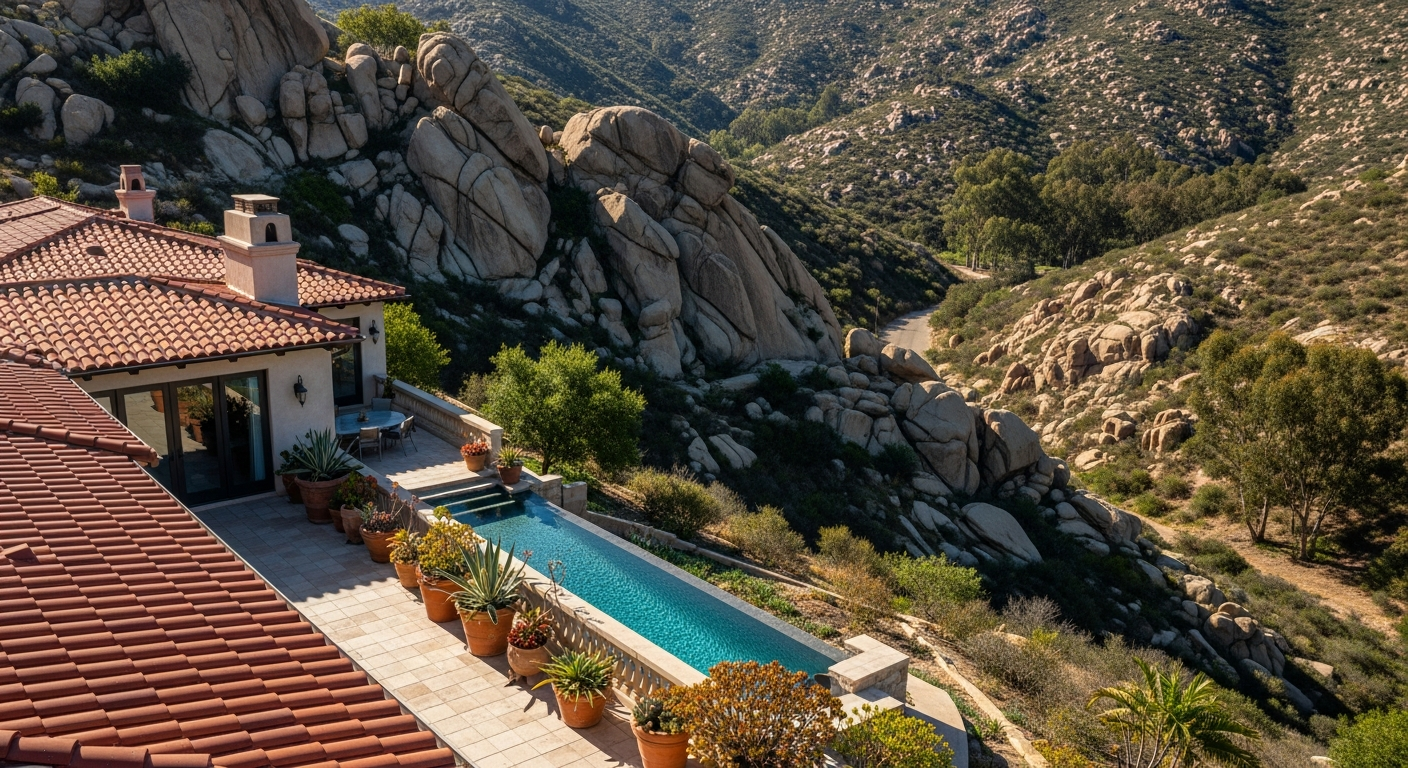
Slope orientation is another critical factor. A south-facing slope will receive more direct sunlight than a north-facing slope, leading to warmer temperatures and potentially higher cooling costs in the summer. A north-facing slope, while cooler, may receive less sunlight during the winter months.
Soil composition also plays a role. Properties with well-draining soil will require less irrigation than those with heavy clay soil. This is particularly important in areas with limited water resources.
Wind Patterns and Property Protection
Wind exposure is often underestimated, but it can significantly impact a property's comfort and maintenance. Properties exposed to strong winds may require more frequent roof repairs, fence replacements, and landscaping maintenance.
Consider the prevailing wind direction and how it affects the property. Are there natural windbreaks, such as hills or trees, to provide protection? If not, you may need to invest in wind-resistant landscaping or structural modifications.
I've seen homeowners struggle with constant wind damage to their outdoor furniture and landscaping, simply because they failed to consider wind exposure when purchasing the property. Over time, these seemingly minor issues can become a major source of frustration and expense.
Water: The Unseen Variable
Water availability and management are critical considerations in North County Inland, particularly in more rural areas like Valley Center and Fallbrook.
Many properties rely on wells for their water supply. Well performance can vary significantly depending on location, depth, and aquifer conditions. Before purchasing a property with a well, it's essential to have the well tested to ensure adequate water production and quality.
Irrigation needs also vary depending on micro-climate. Properties in warmer, drier areas will require more irrigation than those in cooler, more humid areas. Consider the water requirements of the landscaping and whether the property has access to adequate water resources.
Furthermore, fire-zone classifications can impact insurance rates and building requirements. Properties in high-fire-risk areas may require specific fire-resistant building materials and landscaping practices.
The Long-Hold Perspective
The true impact of micro-climate becomes apparent over time. What initially seems like a minor inconvenience can evolve into a significant expense or source of frustration.
Energy bills are a prime example. A property that requires excessive heating or cooling due to poor orientation or insulation will cost more to operate over the long term. These costs can erode the property's value and impact your overall financial well-being.
Landscaping costs are another consideration. Properties in harsh micro-climates may require more frequent landscaping maintenance and plant replacements. This can add up to a significant expense over time.
Resale value is also affected by micro-climate. Buyers are increasingly aware of the importance of energy efficiency and environmental sustainability. Properties that are well-suited to their micro-climate will be more attractive to buyers and command a higher price.
Counterintuitive Insights: The Power of Observation
One counterintuitive insight I've observed is that homes with slightly less dramatic views sometimes offer superior living experiences due to better micro-climates. A home nestled on a lower slope, sheltered from wind and excessive sun, can be far more comfortable and energy-efficient than a home perched on a exposed hilltop with panoramic views.
The key is to prioritize livability over initial visual appeal. Consider how the micro-climate will impact your daily life and make decisions accordingly.
Another frequently missed point: the effect of nighttime cooling. Areas that retain heat late into the evening not only increase AC costs but also reduce sleep quality. This is especially noticeable in densely developed areas with significant asphalt coverage.
Asking the Right Questions
Navigating the complexities of North County Inland's micro-climates requires asking the right questions. Don't just focus on the features and amenities of the property; delve into the environmental factors that will shape your daily life.
Ask about the property's orientation, elevation, and wind exposure. Inquire about well performance, irrigation needs, and fire-zone classifications. Observe the surrounding landscape and assess its potential impact on the property.
Talk to neighbors and get their perspective on the local micro-climate. They can provide valuable insights into the area's weather patterns and environmental challenges.
Ultimately, the goal is to make an informed decision based on a thorough understanding of the property's micro-climate. This will help you avoid costly mistakes and ensure a comfortable and sustainable living experience.
Micro-Climate and Community: A Tale of Two Vistas
Even within a single city like Vista, micro-climates can dramatically alter community dynamics. Western Vista, benefiting from consistent marine influence, fosters a more temperate environment, attracting residents who value outdoor activities year-round. Gardens thrive with less effort, and cooling costs remain relatively stable.
Eastern Vista, however, shifts inland quickly. Afternoon heat intensifies, requiring more robust irrigation and driving up energy bills. Residents here may prioritize indoor living spaces and seek community amenities that offer respite from the sun.
These differences shape social habits, landscaping choices, and even architectural preferences. Understanding these nuances allows buyers to select a location that genuinely aligns with their lifestyle.
The pattern is clear: ignore the micro-climate, and you risk a mismatch between expectation and reality.
A Strategic Approach
Don't let the allure of a beautifully staged home distract you from the underlying environmental realities. Investigate the micro-climate as thoroughly as you would the plumbing or electrical systems.
Visit the property at different times of day to experience the temperature, wind exposure, and sunlight firsthand. Pay attention to the details that listing descriptions often omit.
Consult with local experts, such as landscapers and energy auditors, to gain a deeper understanding of the area's micro-climate and its potential impact on the property.
By taking a strategic approach, you can navigate the complexities of North County Inland's micro-climates and find a property that truly feels like home.
North County Inland includes Vista, San Marcos, Escondido, Valley Center, Fallbrook, Bonsall, and Rancho Bernardo.
Each contains multiple micro-markets defined less by zip code and more by elevation, exposure, and water.
That is why “North County” is not a single pricing story.
It is a collection of environmental trade-offs layered into real estate.
The buyers who navigate it well ask different questions.
Not just how updated the kitchen is.
But how the lot behaves in August, in January, and in a wind event.
Those answers shape daily life.
And over a long hold, they shape value.